
TRAVEL TRENDS - April 2026 FROM DEPTH TO VELOCITY


Through the first quarter of the year, demand did exactly what owners hoped it would do. It filled calendars with
consistency and longer booking patterns. March begins to shift that pattern.
Curaçao welcomed 79,763 stayover visitors during the month, a 10% increase YoY, while total visitor nights grew by 8%. That difference matters.
More guests are arriving but they’re staying slightly fewer days on average. The same occupancy is now being built
through a higher number of shorter bookings. Instead of longer reservations spanning multiple weeks, bookings begin
to form in smaller blocks. That increases the number of check ins and check outs required to maintain occupancy and places more pressure on how bookings are arranged across the calendar. This is not a drop in demand but a shift in how that demand shows up.
The opportunity is no longer just capturing bookings. It’s shaping how those bookings fit together. Nothing is weakening. The margin for error is narrowing.
THE MARCH SHIFT
What do we mean by “the margin for error is narrowing”?
Earlier in the year, the calendar largely took care of itself. Longer stays filled large portions of the month in single bookings. Fewer decisions were required and even when a choice was not perfectly optimized, the outcome remained strong because the calendar stayed intact. That dynamic is now changing.
In March, demand continued to grow but it’s increasingly expressed through shorter stays. That means the same number of occupied nights is now built through a higher number of individual bookings. This introduces a different kind of pressure.
More bookings means more decisions. And more decisions create more opportunities for the calendar to either hold together or quietly fragment. The difference is best understood in simple terms.
Earlier in the year, a single 10 to 12 night booking would fill a meaningful portion of the calendar. One decision created a clean outcome with no gaps and limited operational friction.
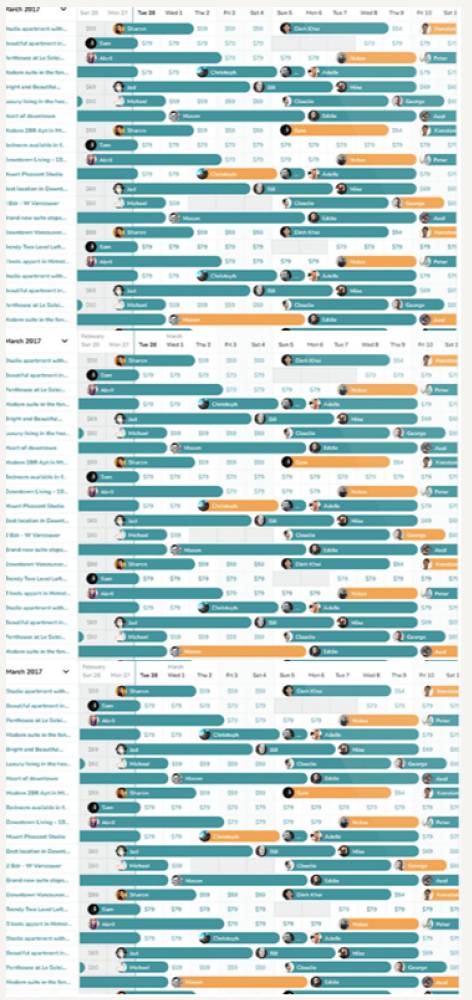
Now, that same stretch of time may be filled by multiple shorter bookings. A four night stay followed by three nights and then five. If those bookings align, the result is the same. If they don’t, small gaps begin to appear. A one or two night opening between reservations that’s difficult to fill or a shorter booking that prevents a longer one from taking its place. Nothing about demand has weakened but the outcome now depends more heavily on how bookings are arranged.
A shift is taking place beneath the surface, driven by both season and a change in who is shaping the calendar. North America is now contributing the largest share of arrivals and a growing portion of total nights, bringing with it shorter average stays and faster booking cycles. At the same time, South America continues to expand at a rapid pace, with demand that is more flexible and often booked closer to arrival. Together,
these segments introduce speed and variability.
Bookings are being made later, stays are shorter and the calendar is being built more incrementally rather than secured in large blocks early.
This is a different operating environment. It rewards responsiveness, awareness of calendar structure and the ability to make small decisions well, consistently over time.
Owner Takeaway
Large calendar blocks are no longer forming on their own. They
need to be protected.
Bookings can no longer be evaluated in isolation. Each
reservation should be considered in the context of what it allows
or prevents next.
A shorter stay may fill a few nights. It can also break a longer
sequence or create gaps that are difficult to recover later.
Priority should be given to bookings that align with existing
check out dates and preserve longer continuous stretches
where possible.
Shorter stays remain valuable, but they should be used to
complete the calendar, not define it. This is where performance
is now won or lost.
The difference between strong results and missed opportunity is
no longer demand. It’s sequencing. The objective has shifted
away from simply filling nights toward building a calendar that
holds together from start to finish.
DEMAND DRIVERS & THEIR IMPACT
Demand is no longer arriving in a way that naturally builds the calendar.
It is coming in layers, with each segment influencing the calendar at a different stage. The implication is not just who is booking but when and how those bookings should be
handled.
North America — Driving pace & forcing earlier decisions
North America now represents the largest share of arrivals and a growing portion of total nights. These bookings tend to be shorter and made closer to arrival. That changes timing.
Instead of waiting for longer stays to anchor the calendar, owners are increasingly faced with shorter bookings arriving earlier in the decision process. The risk is accepting these
bookings too quickly. A short stay taken early can fragment a longer stretch that would have filled more efficiently later.
What this means in practice:
Shorter bookings from this segment require more discipline when the calendar is still open. This often means allowing more time for longer bookings to materialize before accepting shorter stays that would fragment the calendar. The decision is no longer just whether to accept the booking, but what it prevents from forming afterward.
South America — Creating late-stage opportunity
South American demand continues to grow rapidly and tends to appear later in the booking cycle. These bookings are more flexible and more responsive to pricing and availability. They rarely define the calendar early but they are highly effective at completing it.
What this means in practice:
This segment should not be relied on to fill prime space early. Instead, it should be used deliberately to fill remaining gaps as the calendar becomes more defined. Pricing and availability need to remain responsive in the final weeks leading up to arrival to capture this demand effectively.
Europe — Still driving nights, but with reduced control
Europe continues to contribute the largest share of total nights through longer stays. Earlier in the year, these bookings helped establish the structure of the calendar. That influence is now reduced. Fewer long stays are locking in early, leaving more of the calendar exposed to shorter and later bookings from other regions.
What this means in practice:
Owners can no longer rely on early long-stay bookings to create structure. Calendar continuity must now be maintained through active decisions rather than relying on early long stays to create structure.
Owner Takeaway
Demand is not the constraint. Timing is.
Each segment now arrives at a different moment in the booking cycle and should be used accordingly. The advantage now lies in knowing when to act and when to wait. Shorter, earlier bookings should be evaluated in the context of what they displace. Later-arriving demand should be used to complete the calendar, not relied on to build it.
The calendar is no longer secured early. It is assembled over time. And performance is determined by how well those pieces are put together.
PRICING & BOOKING STRATEGY
Early calendar — prioritize structure, not perfection
Calendar is open
Demand uncertain
Long stays are possible
Strategy:
Don’t rush into short bookings
Protect longer windows
Maintain higher minimum stays
Insight:
Early mistakes are structural, not pricing-related
Mid-stage calendar — shape the sequence
Some bookings in place
Calendar forming
Gaps emerging
Strategy:
Accept bookings that align
Reject those that create fragmentation
Adjust minimum stays selectively
Insight:
This is where performance is actually decided
Late-stage calendar — convert remaining demand
Unsold nights at risk
South America / late demand active
Late-stage calendar — convert remaining demand
Unsold nights at risk
South America / late demand active
Strategy:
Reduce minimum stays in gaps
AdjustInsight pricing dynamically & be flexible
:
At this stage, occupancy matters more than structure
The shift owners miss
Pricing is no longer just “high demand = high price” It is now “calendar shape determines pricing strategy”
WHERE PERFORMANCE IS DECIDED
The market hasn’t become more difficult. It’s become less forgiving.
Earlier in the year, strong demand covered small inefficiencies. Longer stays filled the calendar in ways that required less precision and fewer decisions. That’s no longer the case. Demand is still present and in many cases, it’s stronger than before. But it’s arriving in a way that exposes weak decisions rather than masking them.
This is where performance is now decided - not in pricing alone and not in occupancy alone. It’s about how consistently the calendar is managed over time. Owners who continue to treat bookings as isolated transactions will not see an immediate drop in demand. What they will see is a gradual erosion of performance.
Gaps that appear small will remain unfilled. Short bookings will displace stronger ones and calendar structure will weaken without being immediately obvious. And, over time, that difference compounds. At the same time, those who adapt will find that the opportunity has not diminished. It’s become more precise.
The advantage is no longer in access to demand. It’s in the ability to manage it deliberately, consistently and without error.


Comments